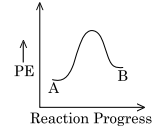
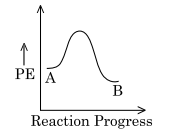
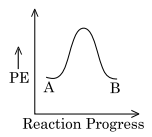
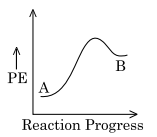
For a reaction A→B, enthalpy of reaction is −4.2 kJ mol⁻¹ and enthalpy of activation is 9.6 kJ mol⁻¹. The correct potential energy profile for the reaction is shown in option.
Correct Answer :
Solution :
The correct answer is Option 3.
To determine the correct potential energy profile for the reaction , we analyze the given thermodynamic and kinetic parameters:
1. Enthalpy of reaction () =
2. Enthalpy of activation () =
1. Thermodynamic Analysis (Exothermic vs. Endothermic):
The enthalpy of reaction is defined as the difference between the enthalpy of the products and the reactants:
2. Kinetic Analysis (Activation Energy):
The enthalpy of activation () is the energy barrier that reactants must overcome to form the transition state (activated complex) at the peak of the curve. The height of this energy barrier from the reactant level (A) to the peak is equal to .
3. Comparing the Profiles:
By analyzing the potential energy profiles in the options:
- Option 3 correctly shows the reactants (A) at a higher energy level than the products (B), with the vertical difference representing the released heat of reaction .
- It also correctly shows the activation energy peak rising above the reactant (A) level.
Access expert-curated educational resources and study materials—completely free.
Create, conduct, and manage professional online assessments with Crey. Perfect for teachers and institutes.
Copyright © 2026 Crey. All Rights Reserved.